The Second Serve Shouldn't Be a Different Serve
Build a second serve you can trust after a missed first serve, not just one you can hit in practice.
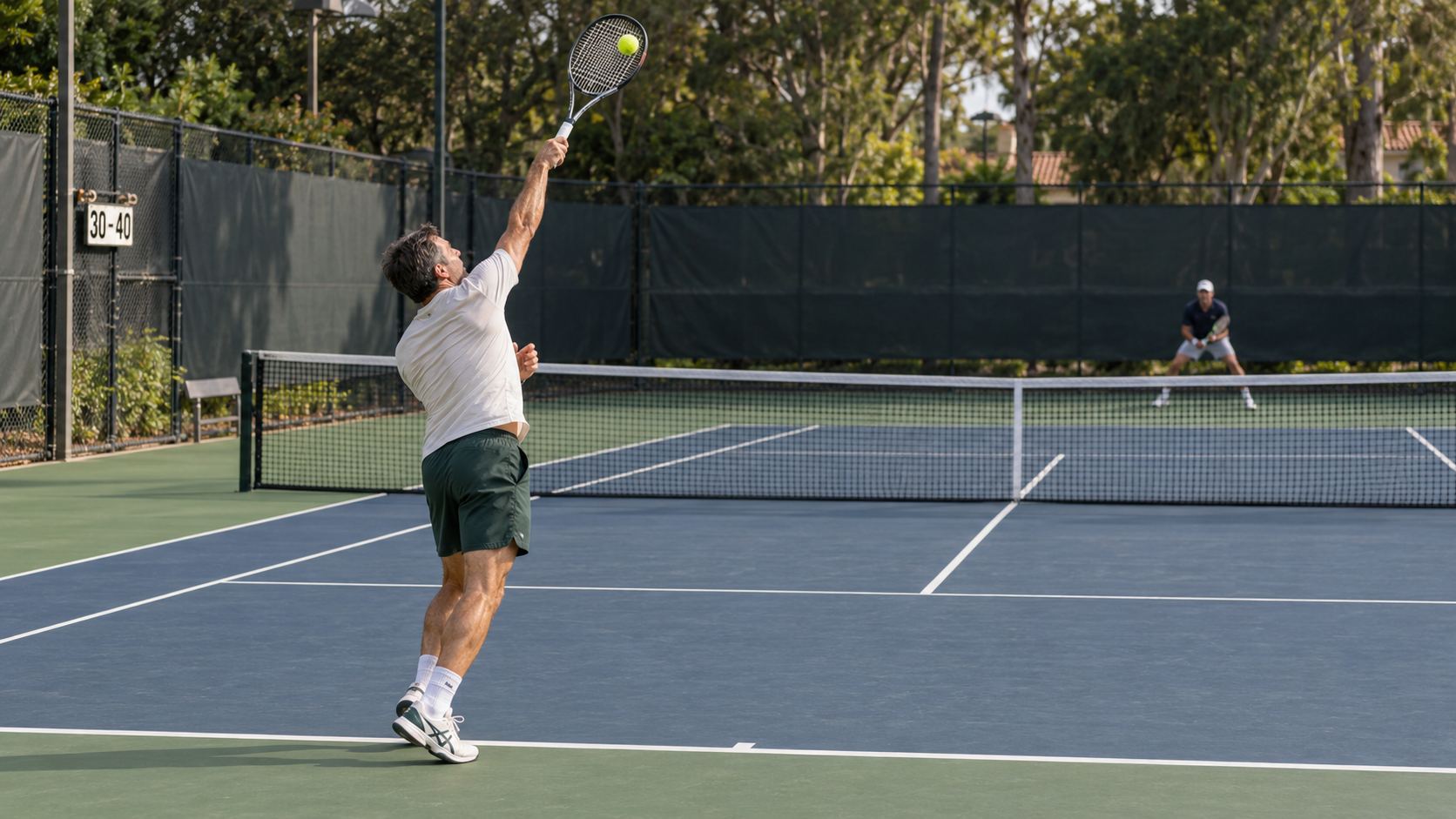
A lot of second-serve problems don't show up during practice.
You can stand at the baseline and make 20 second serves in a row. Then you miss your first serve at 30-40, and suddenly the second serve feels completely different.
The toss gets rushed. The swing gets smaller. You try to guide the ball into the box.
I've seen this often with adult players.
The problem isn't always the serve itself. Sometimes we're simply practicing it in a way that doesn't resemble the situation where we need it.
First, Build a Serve You Can Swing
One of the most common mistakes is turning the second serve into a push.
The player slows everything down because they think less speed means more control.
Usually, the ball then loses shape and becomes easier to attack.
Your second serve doesn't need to be a huge kick serve. It does need enough spin and shape that you can make a confident swing while still getting the ball safely into the service box.
Start closer to the net.
Service-Line Second Serves
Move to the service line and hit your second serve.
Focus on creating the same motion and ball shape repeatedly. Don't worry about speed or targets yet.
Once you can repeat it, move farther back:
Service line → halfway to the baseline → baseline
If the serve falls apart when you move back, move forward again.
You're looking for a repeatable motion, not 50 attempts at a serve you can't control yet.
Give It a Target
Once the motion is reliable, give the serve a purpose.
Don't start by trying to hit the corner.
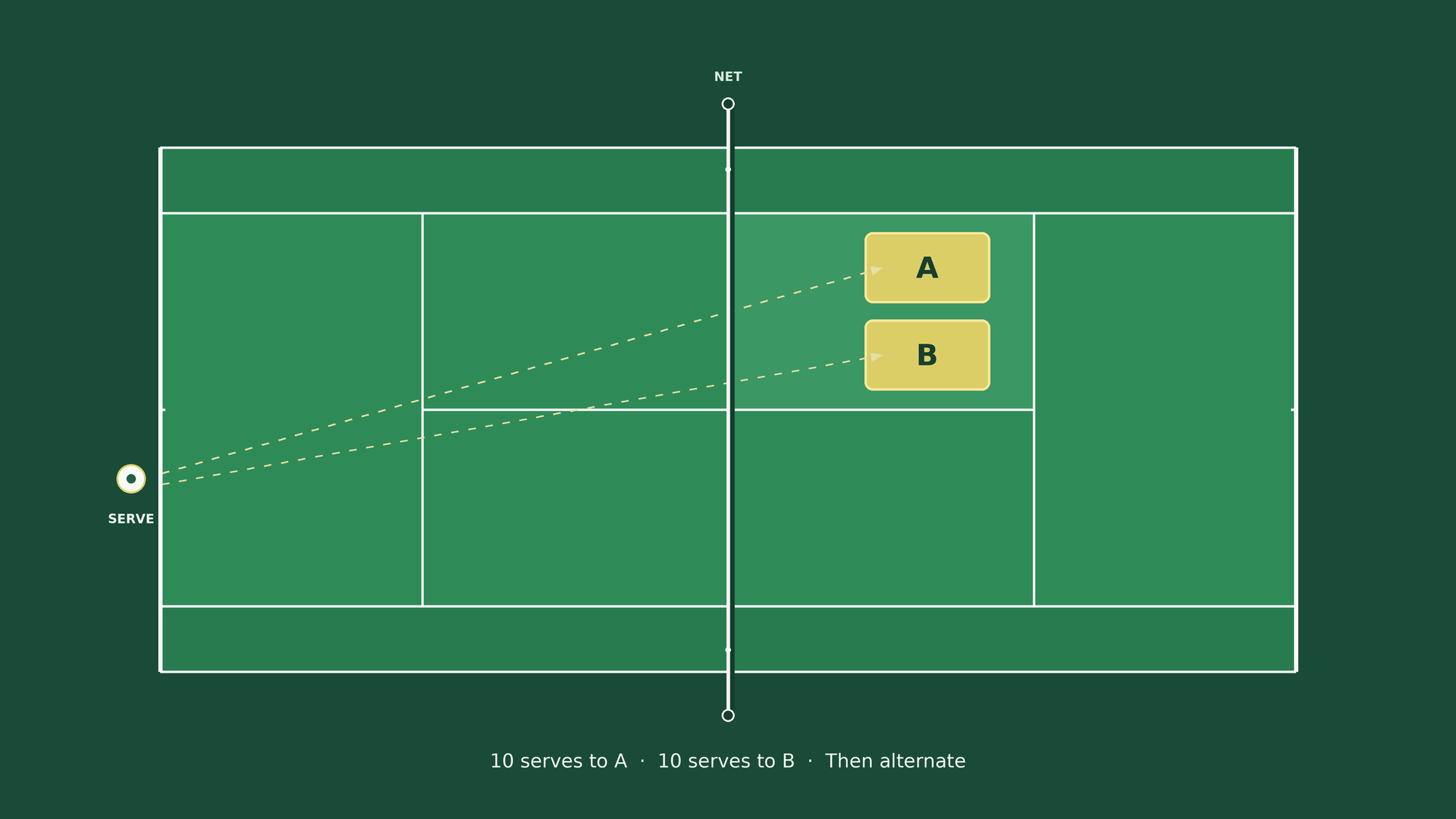
Use a generous target area.
For example:
Deuce side: body or backhand
Ad side: body or backhand
The exact target should fit your serve and the opponent you're facing.
The important part is that you're no longer thinking only about getting the ball in.
You're starting the point with an intention.
Try 10 serves to one target, then switch.
After that, alternate targets before each serve. Now you're adding a small decision to the practice.
Now Practice What Happens After the First Serve Misses
This is where second-serve practice becomes much more useful.
Don't practice your first serve and second serve as completely separate skills.
Practice the sequence:
First serve → miss → reset → second serve → play the point
First-to-Five Drill
Play five points.
For every point:
- Hit your normal first serve.
- If it goes in, play the point.
- If it misses, hit your second serve.
- Play the point out.
- Keep score.
Then start again.
The important part is the transition.
You miss.
You reset.
You serve again.
You're teaching yourself that a missed first serve doesn't require a completely different motion or a panic swing.
Add the Score
Once that feels comfortable, start the game at 30-30.
Play it normally.
Now notice what happens when you miss the first serve.
Does your routine stay the same?
Does your swing stay committed?
Does the ball still have shape?
This is where you find out whether your practice serve is actually ready for a match.
You can also play an entire practice game using only your second-serve motion as your first serve.
That removes the fear of the second serve completely.
It also forces you to see whether the serve is good enough to start a point at 15-15, 30-30 or deuce.
Build the Serve Into the Point
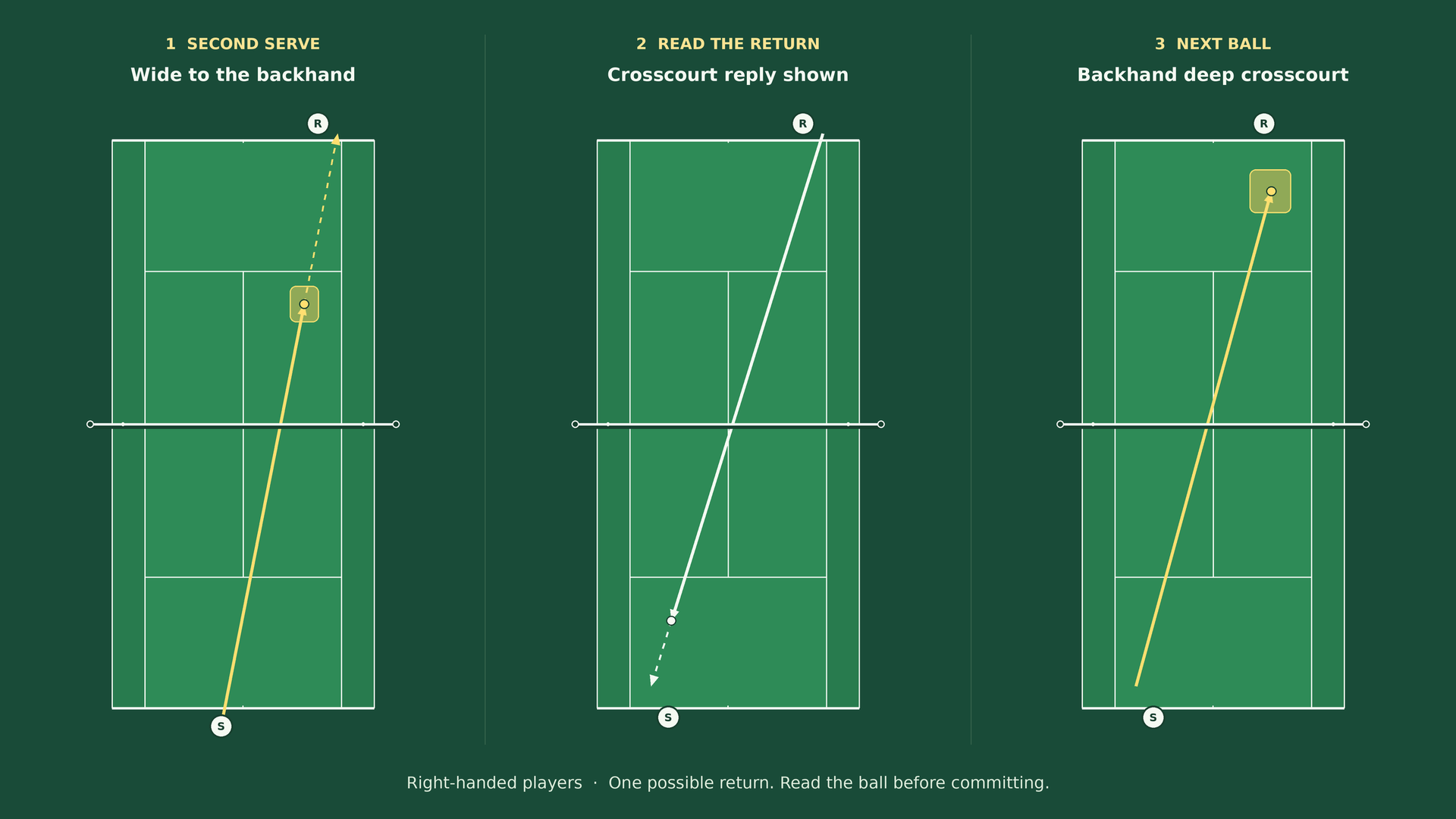
Once you have a second serve you trust, connect it to the next ball.
For example:
Second serve to the backhand → predictable return → first-ball pattern
Now the serve has a job beyond avoiding a double fault.
You're using the placement to help create the next situation.
That's an important shift.
You're not just practicing a second serve.
You're practicing
how your second serve starts a point.
A Simple 30-Minute Practice
If you have half an hour, try this:
5 minutes: Service-line second serves
Focus on shape and rhythm.
10 minutes:
Baseline second serves
Alternate between two large targets.
10 minutes: First serve → second serve → play the point.
5 minutes: Start games at 30-30.
That gives you much more than a basket of second serves.
You're training the serve, the transition, the target and the pressure situation.
And that's where a second serve starts becoming something you can actually trust when the match gets tight.
EXPLORE MORE