Your Recovery Position Starts With the Ball You Just Hit
The center mark is a reference, not a command. Your shot starts the recovery decision. Your opponent’s contact finishes it.
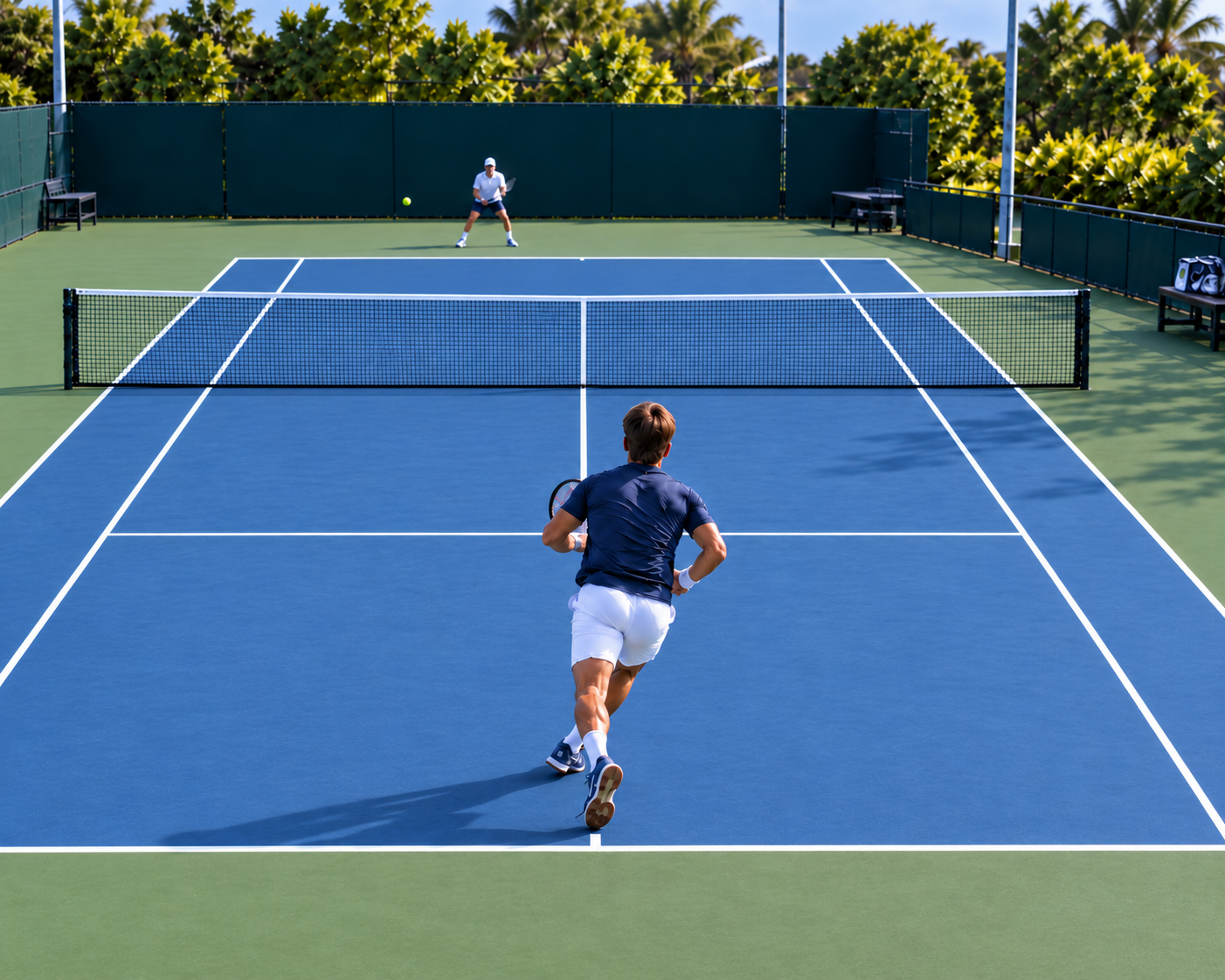
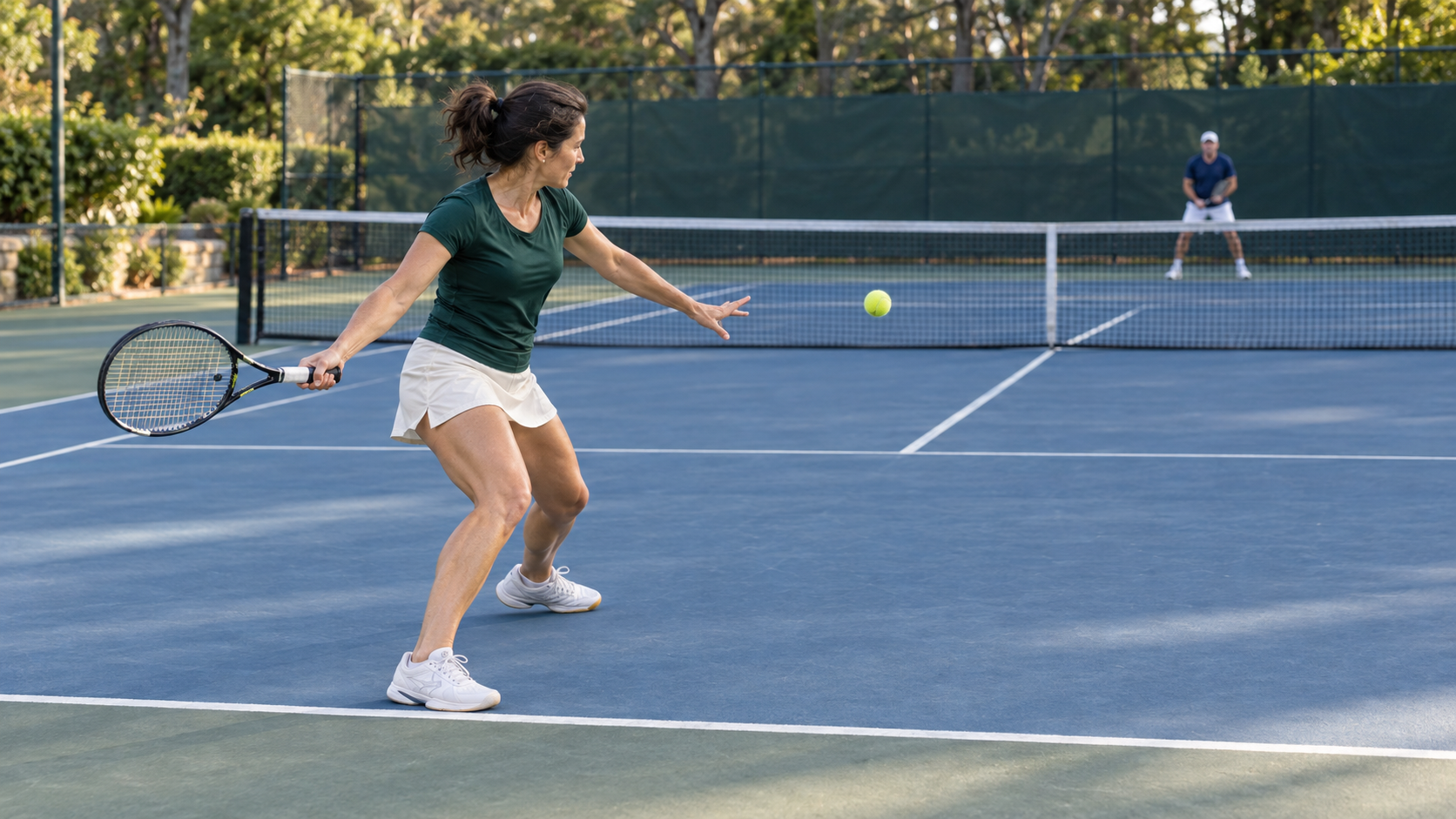
I often see a player hit a good crosscourt ball and then undo part of the work by running directly to the center mark.
The effort is honest.
The destination is not always correct.
Your recovery position should depend on three things:
- Where your shot sends the opponent
- How well they reach the ball
- What shots remain realistic from their contact position
The center mark is painted on the court. It does not know any of that.
This article focuses on recovery during singles baseline rallies.
The Middle of What?
“Get back to the middle” is reasonable advice for a beginning player.
The better question is:
The middle of what?
Your real target is the middle of the opponent’s available shot angles.
Picture two lines beginning at the opponent’s contact point. One travels toward the widest shot they can play to your left. The other travels toward the widest shot they can play to your right.
Your recovery zone sits between those lines.
When the opponent contacts the ball near the center of the court, that zone may be close to the center mark.
When the opponent is pulled wide, the zone shifts.
A 2024 Hawk-Eye study examined 5,679 backcourt shots involving 23 top-100 players. The players positioned themselves near the line dividing their opponent’s possible shot angles, rather than automatically returning to the geometric center of the court.
The research does not give us one magic spot for every rally. It supports a more useful principle:
Recover in relation to the opponent, not the painted lines.
Shot Direction Starts the Decision
The ball you hit tells you where the next shot will begin.
A crosscourt ball and a down-the-line ball place your opponent in different locations. Those locations create different angles.
But direction is only the first clue.
Depth, pace, height and width determine whether your opponent reaches the ball comfortably or under pressure.
A deep ball is not automatically difficult. A slow, high ball may give the opponent plenty of time.
A shorter ball is not automatically easy. If it stays low and pulls the opponent forward or wide, the contact may still be uncomfortable.
Read the entire situation.
You hit a deep crosscourt ball
Suppose your crosscourt ball pushes the opponent wide and behind the baseline.
Recovery: Begin moving toward the center of the angles available from their contact point. Do not blindly return to the center mark or remain parked where you hit your shot.
If the opponent is rushed, stretched or moving backward, you may be able to hold a slightly more aggressive court position.
Why it works: A pressured opponent has fewer shots they can execute well. The crosscourt reply may be the higher-percentage choice, while changing direction down the line becomes more demanding.
If the opponent arrives balanced with comfortable contact height, both directions remain available.
You hit a short crosscourt ball
Now imagine the ball lands short and the opponent steps inside the baseline with time.
Recovery: Move quickly toward the center of their attacking angles. Be prepared to give yourself additional depth if their contact is comfortable.
Why it works: Earlier contact gives the opponent more ways to use the court.
They may:
- Continue crosscourt with a sharper angle
- Change direction down the line
- Hit behind your movement
- Drive through the open court
The shorter ball has reduced your reaction time. Your recovery must become more urgent, not merely more central.
You hit a deep down-the-line ball
A deep down-the-line ball can push the opponent toward the outside of the court.
Recovery: Move toward the center of the angles created by their new contact position. Be ready for the higher-margin crosscourt reply without completely surrendering the line.
Why it works: Changing direction down the line alters the geometry of the rally. It often leaves more court available on the diagonal.
The quality of your shot still matters.
If the opponent is deep and uncomfortable, you may have time to hold your ground. If they are balanced, your recovery must be quicker and more complete.
Do not recover based on the ambition of your shot. Recover based on what the shot actually accomplished.
You hit a short down-the-line ball
This is one of the more dangerous balls to leave short.
Recovery: Move urgently toward the center of the opponent’s attacking angles. If they are stepping well inside the baseline, give yourself enough space to react.
Why it works: The opponent may attack crosscourt, continue down the line or play behind your recovery.
You have given them time and changed the direction of the rally.
That is a generous combination. Unfortunately, you are being generous to the wrong person.
You hit a wide ball
“Wide” does not automatically mean the opponent has fewer angles.
A balanced player contacting the ball outside the singles sideline may create a very sharp crosscourt shot.
A stretched player reaching the same ball late may have far fewer shots they can control.
Recovery: Move toward the center of the realistic angles from their contact point. Then adjust according to their balance and movement.
Watch whether the opponent is:
- Balanced or stretched
- Moving forward, sideways or backward
- Contacting high or low
- Early or late to the ball
Their location creates the geometry.
Their contact quality tells you which parts of that geometry they can actually use.
The Better Recovery Sequence
Recovery should not begin after you have finished admiring your shot.
Use this sequence:
1. Hit
Recognize the direction, depth and quality of your ball.
2. Move
Begin moving toward the center of the opponent’s available angles while your ball travels.
3. Read
Watch how the opponent approaches the ball.
Are they balanced? Stretched? Moving backward? Stepping inside the court?
4. Adjust
Make a small change to your recovery based on the contact they are about to make.
5. Split
Time your split step with their forward swing and contact.
The sequence is:
Hit. Move. Read. Adjust. Split.
You are not guessing where the ball will go.
You are positioning yourself to respond to what the opponent can reasonably do.
Try the Recovery-Zone Drill
Place three markers near your normal baseline recovery area:
- One near the center
- One slightly left
- One slightly right
These are reference zones, not permanent positions.
Level 1: Direction
Play controlled crosscourt and down-the-line patterns.
After each shot, move toward the marker that best covers the opponent’s available angles.
Level 2: Contact Quality
Continue the same pattern, but now read the opponent.
If they reach the ball comfortably, complete your recovery with urgency.
If they are stretched or moving backward, hold a more assertive position while remaining balanced.
Level 3: Live Points
Remove the required pattern and play the point.
Judge the recovery using three questions:
- Did the player start moving immediately?
- Did the position match the opponent’s contact point?
- Was the player balanced when the opponent struck the ball?
The goal is not to reach a cone perfectly.
The goal is to connect the shot, the read and the next movement.

Your Match Challenge
Take these four principles into your next match:
Opponent contacting near the center:
Your recovery zone will usually sit close to the center.
Opponent wide but balanced:
Shift with their available angles and respect both directions.
Opponent wide and under pressure:
Hold a stronger court position, but remain balanced enough to react.
Opponent inside the baseline with time:
Recover urgently and protect the larger attacking picture.
You do not need to memorize a different coordinate for every ball.
Remember the sequence:
Hit. Move. Read. Adjust. Split.
Your shot begins the recovery decision.
Your opponent’s contact completes it.
That is how you stop returning to the middle out of habit and start recovering with a reason.
EXPLORE MORE