Train for Tennis, Not Just Fitness
How to Build Strength and Power That Actually Transfers to the Court
There is a difference between finishing a workout tired and finishing a workout better prepared for what you actually want to do.
You can spend an hour in the gym, sweat through your shirt, burn hundreds of calories and still leave without training many of the physical demands you face on a tennis court.
That is the question serious adult players should ask about their off-court training:
Will this help me move better when I play tennis?
Tennis asks you to accelerate, stop, change direction, load one leg, push off again, rotate, reach and recover—often within a few seconds. Research in tennis continues to identify change-of-direction ability as an important physical quality in the sport, while multi-directional training has been shown to improve change-of-direction and reactive movement in tennis players.
So training for tennis needs to look different from simply getting fit.
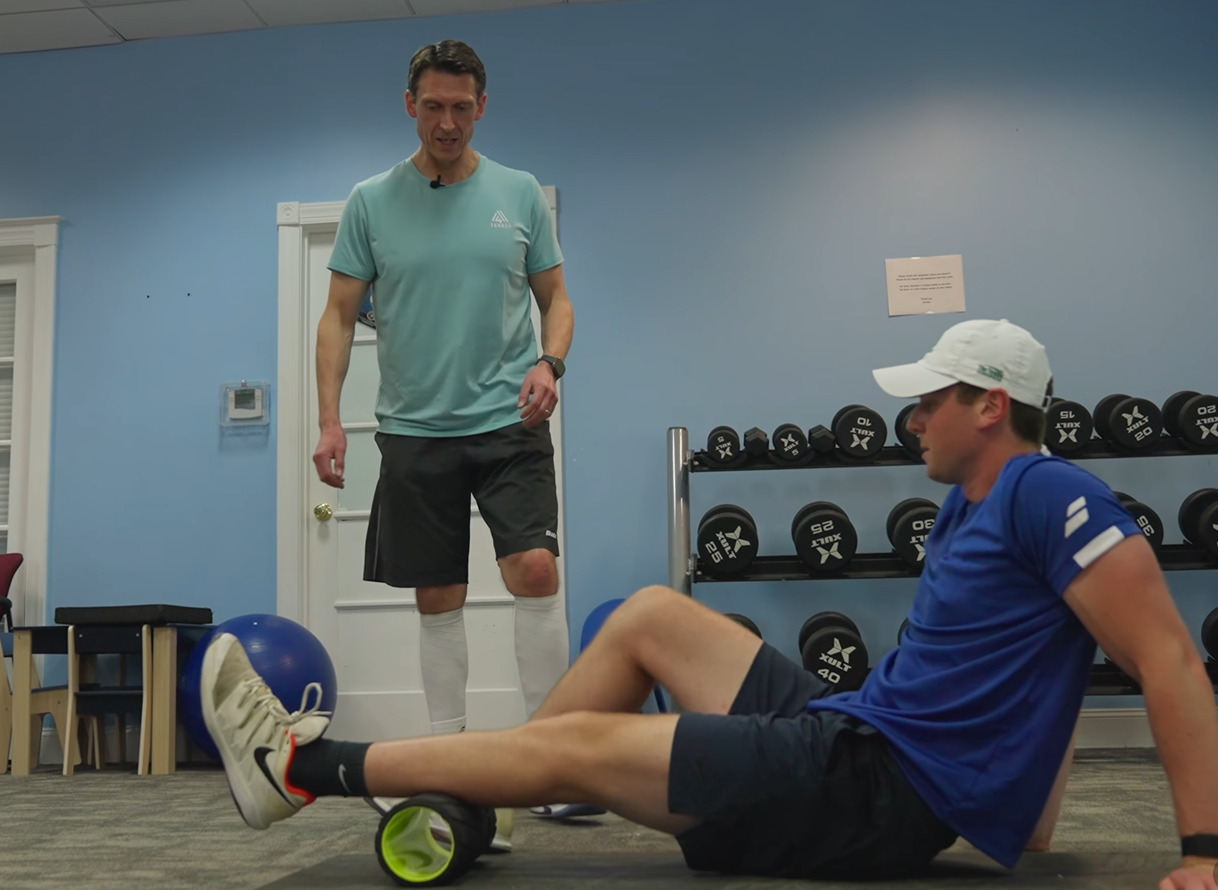
In a Tennis Congress strength and power session, strength and conditioning coach Dominic King shows what that difference can look like.
Build Strength—Then Teach Your Body to Use It Quickly
Dominic doesn't begin with the hardest exercise.
He begins by preparing the body.
The session starts with foam rolling through areas including the upper back, lats, glutes, quadriceps, adductors and calves. That moves into an activation and mobility circuit using glute bridges, spinal movement, alternating arm-and-leg extensions and side planks.
The idea is simple: prepare first, then load.
From there, the workout begins connecting strength to power.
A Romanian deadlift develops strength through the lower body. Then, after shoulder work, Dominic moves into a depth jump.
His cue is concise:
“Minimum contact, maximum height.”
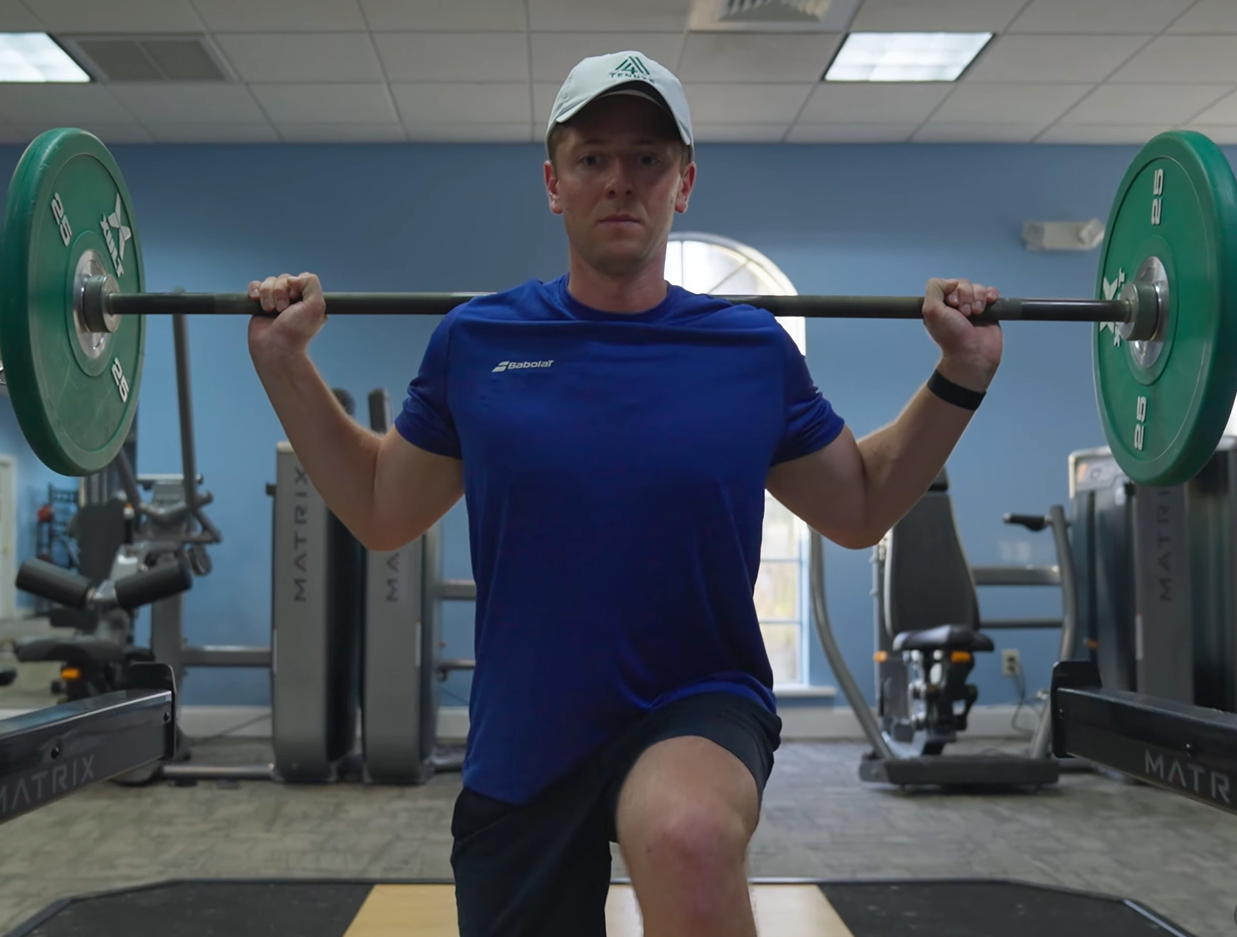
Later, forward lunges are followed by jump lunges. Lateral lunges are followed by lateral bounds.
There is a pattern:
Build force → then produce it quickly.
That matters because tennis rarely gives you much time to access your strength.
You don't slowly push yourself toward a wide forehand.
You recognize the ball, load and move.
You don't gradually accelerate toward a short ball. You have to go.
This is also why Dominic intentionally keeps repetitions low during the explosive exercises.
When jump height, speed and control start disappearing because you're tired, you are no longer expressing the same quality.
If the goal is power, the objective isn't to see how many repetitions you can survive.
It's to make each repetition explosive.
Don't Forget the Direction Tennis Is Actually Played
One of the simplest points in the session may also be one of the most useful:
Train sideways.
A large amount of traditional gym work takes place forward and backward or straight up and down.
Tennis doesn't.
Dominic pairs lateral lunges with lateral bounds because a tennis player needs both sides of the equation.
You need to be able to load and control one side of your body.
Then you need to push away from it.
During the lateral bounds, Dominic describes the action as:
“Load and explode.”
Think about what happens when you're pulled wide.
You move toward the ball.
You organize your body over the outside leg.
You absorb force.
Then you have to push back toward the court.
That is why the landing matters just as much as the jump.
The ability to brake and redirect force is closely connected to change-of-direction performance, not just the ability to produce more force.
Dominic also uses single-arm rows, one-arm landmine presses, alternating lunges and one-leg-to-the-other lateral bounds.
The point isn't to make every tennis exercise look exactly like a forehand or serve.
It's to recognize that tennis regularly asks one side of the body to do something different from the other.
The workout reflects that.
Give the Shoulder a Place in the Workout
The shoulder work isn't saved for a five-minute afterthought.
Dominic places scapular push-ups, internal and external rotation work, rows and landmine presses between lower-body exercises.
That serves two purposes.
The legs get recovery time before another demanding strength or power exercise, while the shoulder gets regular attention throughout the session.
That is a useful model for adult tennis training.
Serving and other repeated overhead actions place substantial demands on the dominant shoulder, and research has documented differences in strength and range of motion in tennis players' hitting shoulders.
Shoulder strength and control therefore deserve a deliberate place in tennis conditioning rather than being ignored until something feels wrong.
The full session follows a logical progression:
Prepare the body.
Build strength.
Turn strength into power.
Train movement in multiple directions.
Give the shoulder consistent attention.
That is much more useful than collecting random “tennis exercises” from social media.
Before your next off-court workout, ask three questions:
Where am I building strength?
Where am I training myself to use that strength quickly?
Am I preparing for the directions and positions I actually encounter on court?
If the answers aren't clear, the workout may still improve your general fitness.
But it may not be doing as much for your tennis as it could.
WATCH THE FULL WORKOUT
In the full Tennis Congress session, Dominic King takes a player through the complete strength-and-power workout and explains the purpose, repetitions and coaching cues behind each exercise.
Pay particular attention to the sequence—not just the exercises.
That's where much of the value is.
TAKE THE WORKOUT TO THE GYM
We've also created a simple downloadable version of the session so you don't have to remember every exercise once you get to the gym.
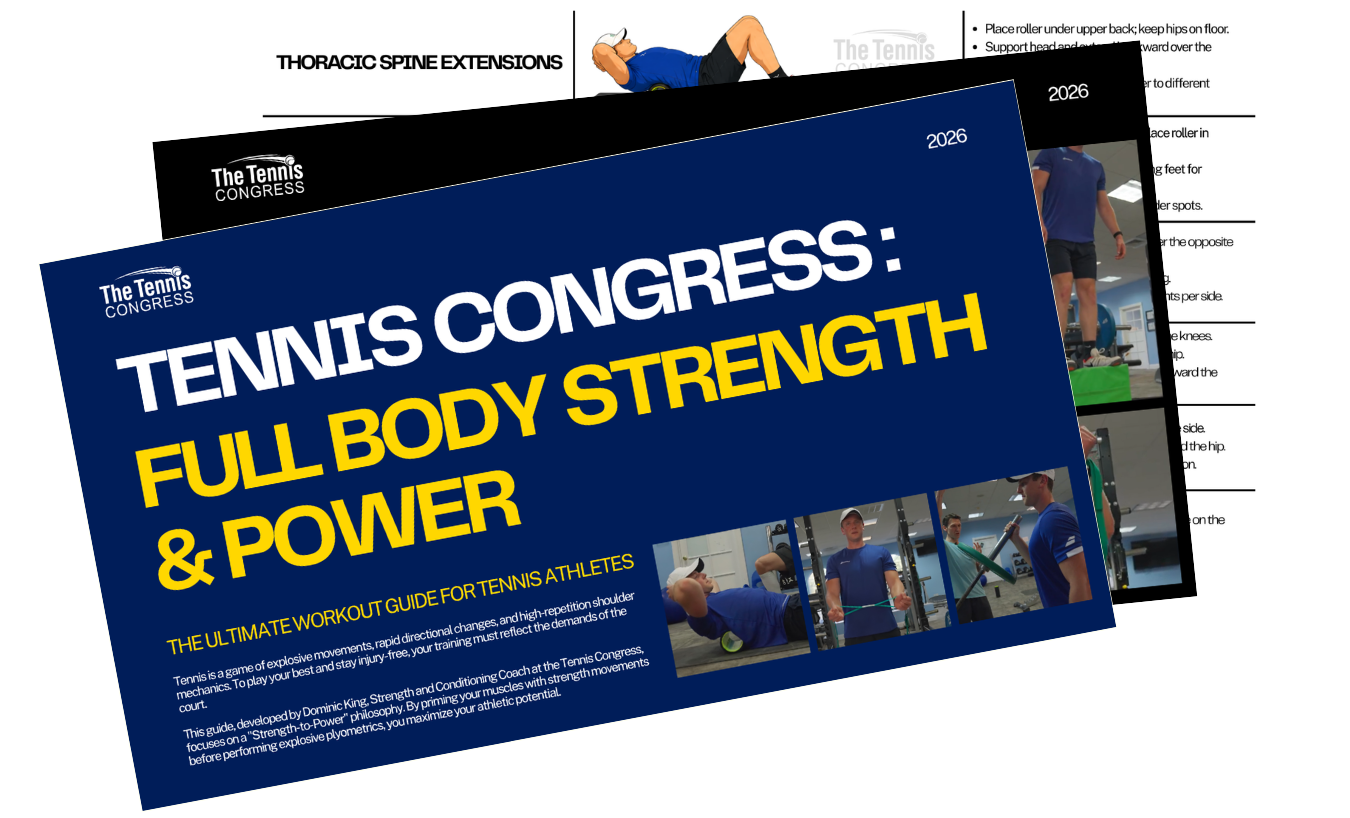
[Download the Free Tennis Strength & Power Workout PDF]
The goal of tennis performance training isn't simply to work harder.
It's to make the work connect.
The next time you finish a gym session, don't judge it only by how tired you are.
Ask a better question:
Did this prepare me for the way I actually have to move on a tennis court?
That's the difference between working out and training for tennis.
EXPLORE MORE